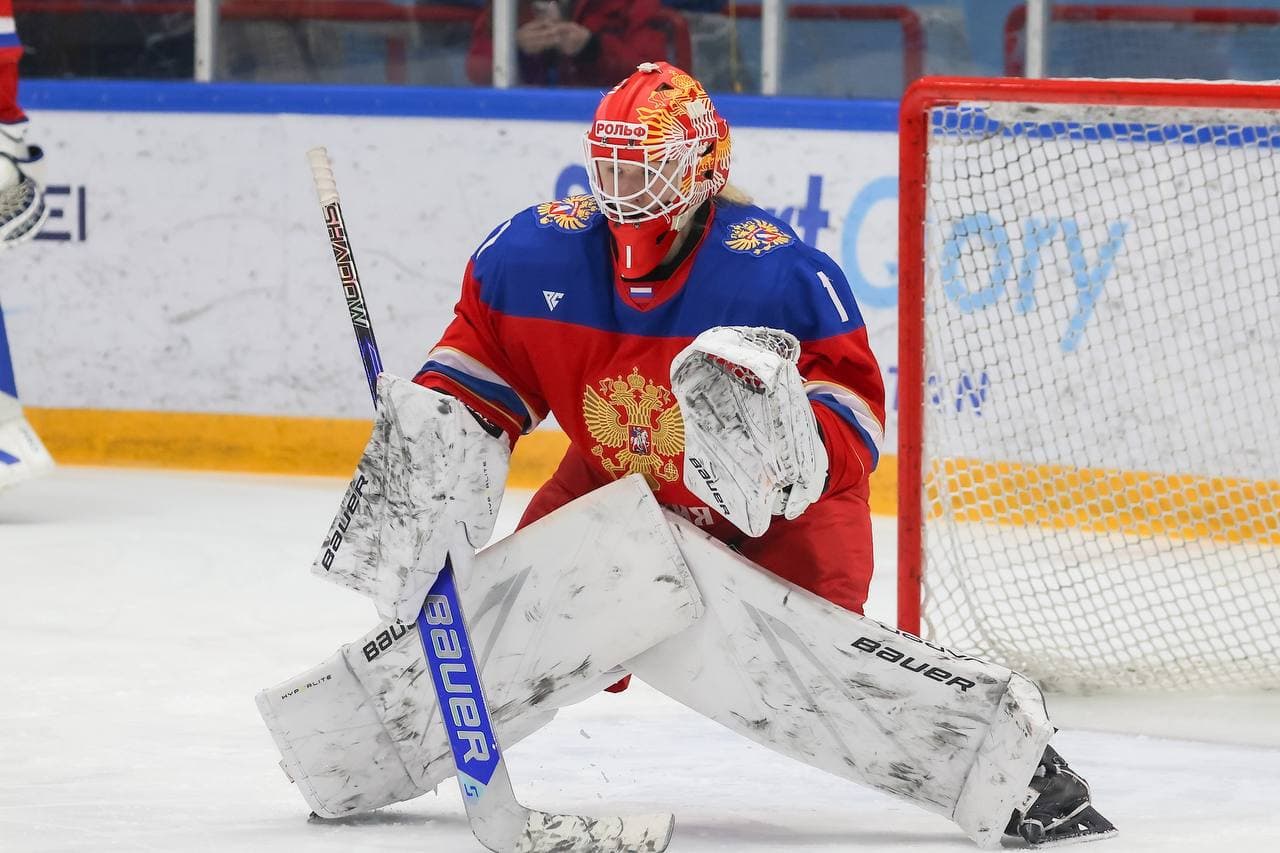
An interview with Dobrynya Suchkov as part of the "Athletes and their experience" project.
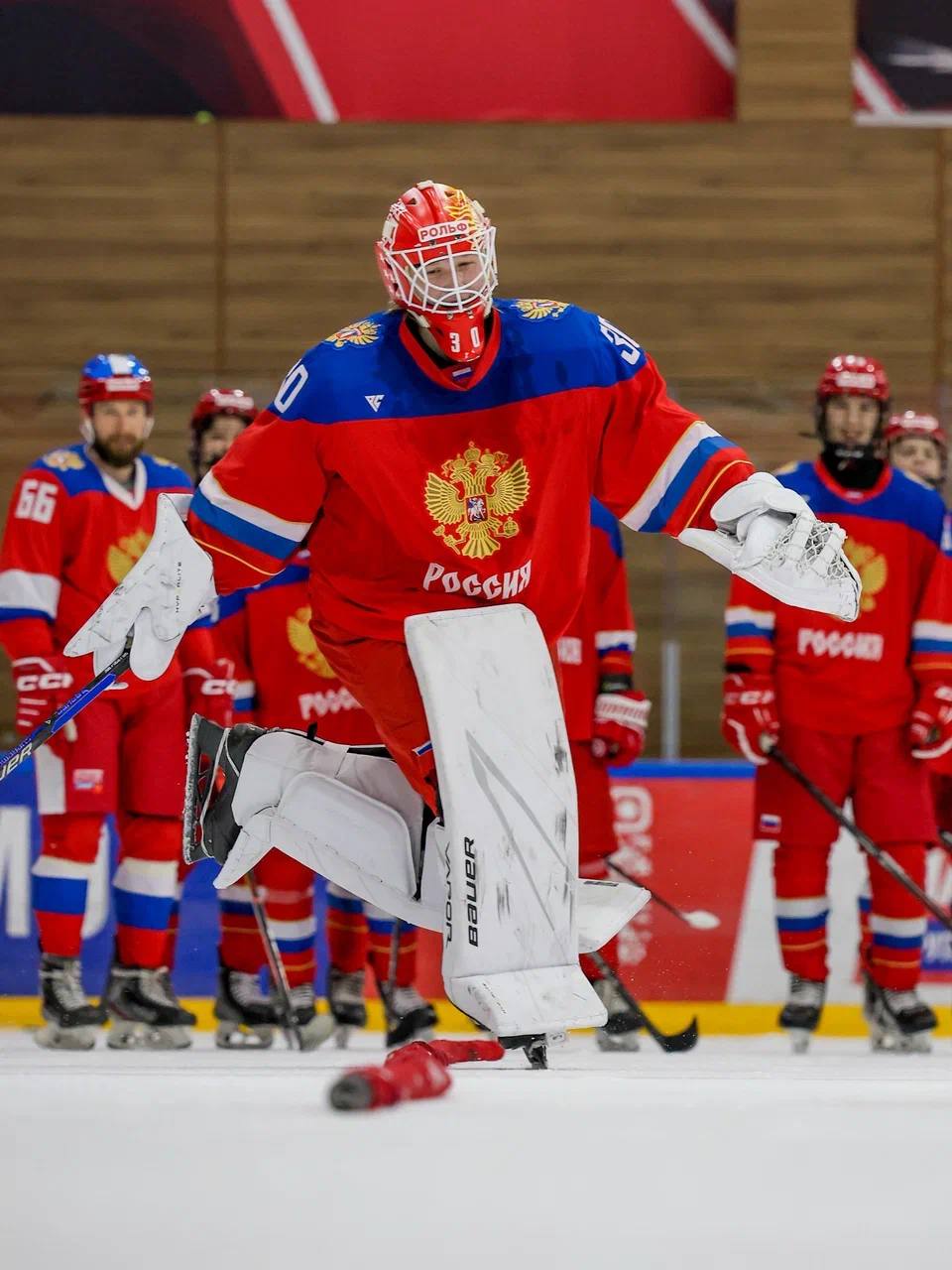
Dobrynya Suchkov
Russian ice hockey goaltender, one of the 21 strongest goalkeepers in Russia.
Dobrynya's quote:"If I'm not shaking before a game, nothing is going to come of it"Favourite thing in hockey:The save. It's when everyone thinks it's a goal, and the goalie catches the puck.Music that puts him in the mood for a good game:Pop or rap, something with a charge to it.Favourite film:"Rush".A story he will remember for the rest of his life:The move to Spartak and the championship season.A motto or phrase that gives him strength:His coach's words: "Catch the first shot and you're in the game".
Russian hockey has its own Dobrynya Nikitich. Like a true bogatyr, he stands guard at the outpost, protecting his team's net. By 2026, Dobrynya Suchkov had put together an impressive collection of titles: best goaltender in Moscow, best goaltender in Russia, the national team's number one at international tournaments. But behind the gold medals, as you would expect, lies a great deal of inner work. We spoke to Dobrynya about how a winning goaltender's psychology is put together.
The making of a "calm wall"
Dobrynya's path began in 2014. While the whole country was following Sergei Bobrovsky's triumph at the world championship in Minsk, a four-year-old boy was putting on old goalie gear and copying his hero's movements in front of the television. It wasn't just a game — it was choosing a path in life.
"A goaltender is calm. A goaltender is unique. A goaltender is more than half the team. If his game isn't going, the team doesn't feel as confident. It gets much harder for them."
Despite his coaches' attempts to turn him into a skater, Dobrynya stubbornly kept going in goal, even without pads. At 8 he finally "got dressed" as a goaltender at the Spartak academy, where he still works with his first mentor, Dmitry Shamygin.
Adrenaline as a way of seeing
For many people fear is an obstacle in sport, but for Suchkov it is a sign of readiness. He describes being in the zone through physical arousal that helps him literally see the puck differently.
"I have to be properly shaking — not from fear but from adrenaline. Then I feel charged up. If I'm not shaking, I'll play like I haven't slept for two days. But if I am shaking, I'm fast, I'm in control of everything."
That drive lets him switch off even physical pain. Nobody on the team, let alone in the crowd, noticed that Dobrynya finished one of the most important games of his life with torn menisci, simply not registering the injury in the heat of the battle:
"On adrenaline I don't feel anything at all. Something hits me, fine. The injury happened during the game, I played it out and didn't even feel it."
The magic of "that" day and the trap of the perfect ritual
The turning point in Dobrynya's career was the derby against CSKA in 2024. Before that game his coaches had been in no hurry to trust him with anything genuinely important, but that day everything came together. Suchkov went out and won. From that moment his life turned into a strict algorithm: his brain had "memorised" the conditions of success and demanded they be reproduced exactly. Preparing for a match became a sacred list of actions in which nothing is a detail. Brushing his teeth strictly the day before a game (never in the morning), cottage cheese for breakfast, a compulsory morning skate if the game is in the evening, and even which foot he gets out of bed on.
"Psychologically I have my ritual before every game, every day of mine is the same. If I'm sure I did everything perfectly before the game and I'm ready — it always goes well for me."
But Dobrynya is a rare example of a young athlete who already sees the danger in that dependence. He understands that when the schedule gets tighter and games come every other day, the "magic of the cottage cheese" could turn into a psychological prison. Moving from external trappings and rituals to inner readiness is the challenge he is setting himself right now.
Six games going nowhere: when rituals are powerless
Even bogatyrs have moments when the shield starts to crack. There was a period in Dobrynya's career he recalls reluctantly, and it became his main point of growth. Six games in a row, nothing worked. With no visible physical cause, the puck simply stopped finding his glove.
"There was a time when my game wasn't going, six games in a row nothing worked, for no reason. And then I got really into my own head... I broke down, it was a cumulative effect. In my head was the thought that I wasn't ready. There I was, having done everything perfectly — and I wasn't ready."
This state is any athlete's worst nightmare: you keep every ritual, eat that cottage cheese and get out of bed on the right foot, and — nothing. Psychologists call it burnout. For Dobrynya the way out came as a paradox: a serious knee injury. Torn menisci right before the Russian final forced him to stop.
"You could say that injury actually helped, because I got some rest. I learned my lesson — you absolutely have to take a break from hockey. A whole season as the starting goaltender is hard psychologically."
The turning point: from injury to being named the best in Russia
It was in that moment — between the pain in his knees and the psychological exhaustion — that Dobrynya showed his real character. His coach instilled confidence in him, convincing him that everyone goes through slumps. Suchkov went out onto the ice for the Russian final on sheer will, caught his rhythm in the very first game, and from there it all flowed.
The result of that fight with himself was a triumph: having come through a run of failures and an injury, in 2025 Dobrynya was named the best goaltender in Russia.
Dobrynya acknowledges that it is harder for a goaltender than for a skater, precisely because of "mentally living through" mistakes. A forward can forget a miss by the next shift; a goalkeeper lives with it for days.
"Goals stay in your head for at least another day. They keep replaying... If a skater makes a mistake, maybe nobody even notices, but if it's the goalie, it's a goal straight away, everyone sees it. And that goal stays in my head for at least another twenty-four hours."
A survival code: 90% of success
Today Dobrynya Suchkov is certain: plenty of people have the physical attributes, but the one who wins is the one who prepared better psychologically and "got their head right". To that end he has even limited his screen time, on the advice of a sport psychologist. Digital hygiene has become part of the training process.
"90 percent of all success is psychology. Physically, even a passer-by could be ready; psychologically, only a handful are. It's hard: games every other day, no personal life, only hockey."
Rounding off the conversation, the country's best goaltender gives honest advice to anyone who is still only dreaming of the big time:
"If you're going after a goal, you have to cut out all the interference: going out, clubs, bad habits, the phone as well. They shouldn't exist at all. Only the goals."
Despite a mountain of awards by the age of 15, Dobrynya believes his real dream is nowhere near yet. Ahead of him — he very much hopes — are the world's arenas and games against Canada and the USA, where his "psychology of calm" will face its real test.
We wish him luck and hope his dream comes true!