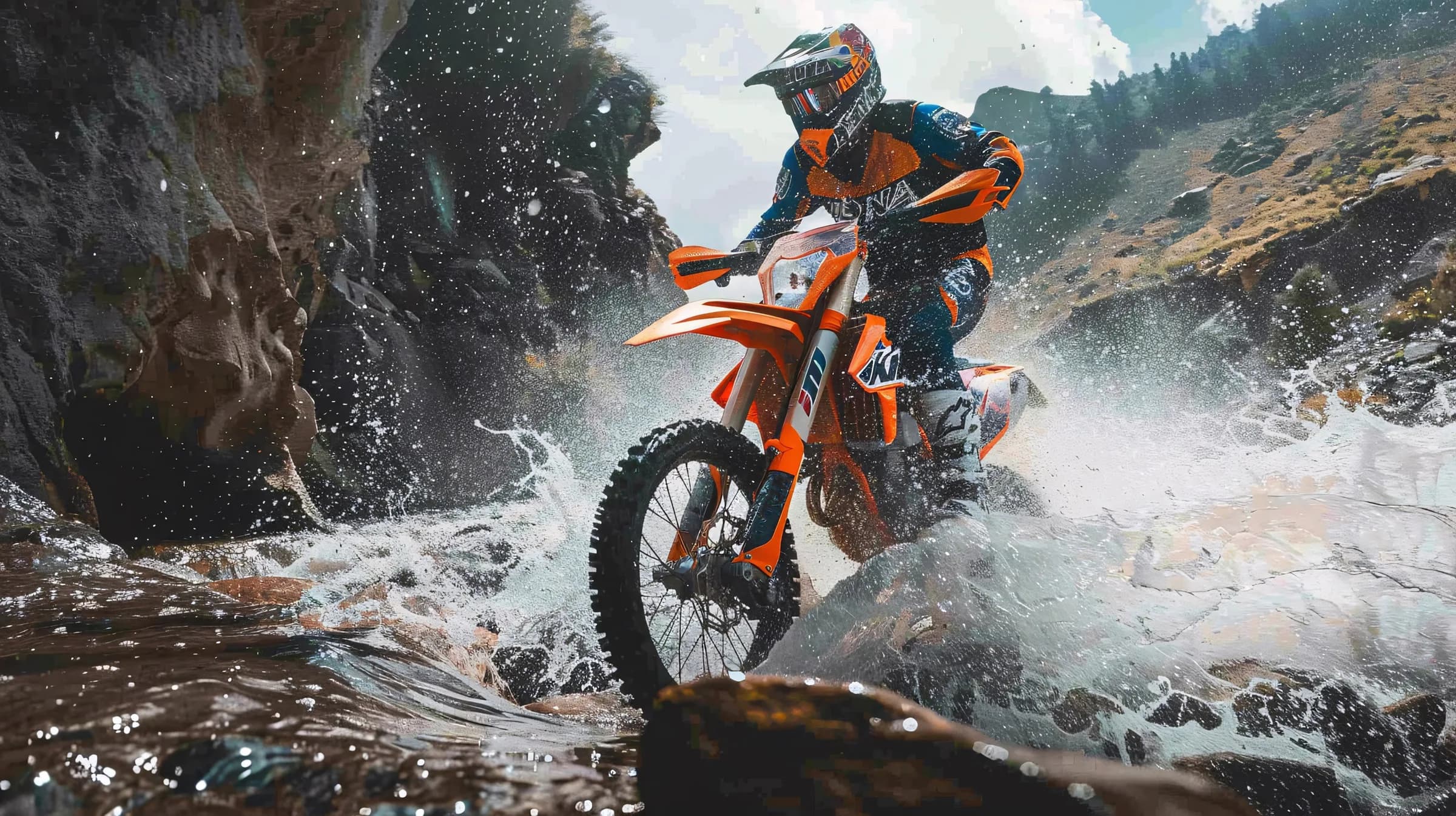
I have encountered the opinion in motorcycle communities that those who ride motorcycles do not need psychologists, as the motorcycle itself is the best psychologist.
So why do professional motorsport athletes, including those at the world level, turn to sports psychologists and acknowledge the effectiveness of this work? Why don't their motorcycles help them?
*Scientific research* in the field of sports motivation has shown that, despite some common motives, the motivation of professional athletes differs from that of amateur athletes.
Pleasure.
By examining a large number of amateur athletes across different sports, genders, and ages, researchers concluded that the overwhelming majority of them are driven by the motive of obtaining pleasure, the opportunity to have fun and interesting experiences. But we do not generally treat our work in this way, do we? For professional athletes, sports are their job. For amateurs, sports are just a part of their life; for professionals, it is a bigger and often the most significant part.
Mastery.
In amateurs, the second place after pleasure is usually taken by mastery, acquiring new and developing existing skills. This motive is comparable to the more complex self-development motive in professionals.
Health, appearance.
Many amateurs engage in sports for good physical shape, health, and attractive appearance. I would however assume that no one engages in motorsport for health, even among amateurs, not to mention professionals. Professionals have no motivation related to health in their sports, and I believe it's unnecessary to explain why.
Psychological state.
The motive for psychological state, though less popular, is still significant for many amateurs. It has been scientifically proven that amateur sports help relax, cope with stress, and divert from problems and unnecessary thoughts. This means that if you are an amateur athlete, your motorcycle can indeed become the best psychologist for you, and a professional sports psychologist may not be necessary for you. Some amateur athletes acknowledge that by channeling their aggression into motorsport, they have become calmer and more conflict-free in everyday life, which in turn solved several of their problems.
However, for professional athletes, the situation is entirely different. Professional sports, especially high-performance sports, do not alleviate stress; they are the main source of stress in an athlete's life: challenging parts of the track, dangerous racing situations, weather conditions, societal pressure (from competitors, sponsors, teams, coaches, organizers, fans), responsibility, and so on. Stress factors in elite sports can even consist of seemingly contradictory elements: losses and wins in significant competitions, injuries, and returning to sports after injuries.
Therefore, one of the primary directions of a sports psychologist's work is to cope with stress and teach the athlete to manage their state and develop self-regulation skills.
Another important direction is support towards achieving sports results. Often, to win, it is necessary to execute risky elements of increased complexity. A sports psychologist helps not only to cope with fear but also to master the necessary skills in the shortest possible time with minimal physical effort, which can play a crucial role in professional sports. Amateurs generally do not have such a need.
Of course, not all motivational factors and not all directions of a sports psychologist's work have been listed here, and the individual motivational profiles of certain amateur athletes may vary significantly from the generalized results of the sample, but we hope to have clarified the question of sports psychology in motorsport a bit more.
Wishing you a successful season! Take care of yourself!
\ Bocharov K.A. Psychological diagnostics in sports: a textbook. / K.A. Bocharov, D.V. Bondarev, L.M. Dovzhik. – Moscow: Sport, 2023*