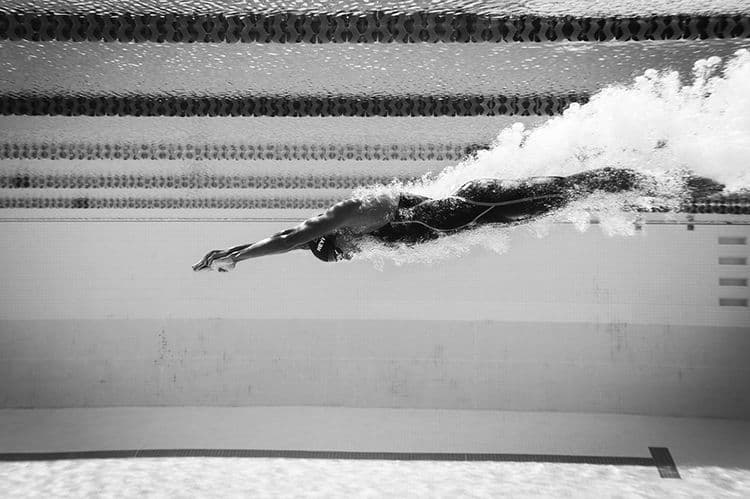
A sport psychologist in swimming
Swimming is a unique sport in terms of psychological load. Thousands of hours of repetitive work in the water, early mornings, isolation from the outside world, and seconds that decide everything. A swimmer's mind is under enormous pressure that often goes unnoticed.
Why does swimming need a sport psychologist?
1. Monotony is enemy number one
Swimmers spend up to 6 hours a day in the pool, looking at a black line. The repetition kills motivation, dulls attention and brings on burnout. A psychologist helps you find inner meaning and something to hold on to in the routine, turning the monotony into a meditative process.
2. Pre-race anxiety
Ten minutes before the start a swimmer is left alone with water that does not forgive mistakes. Nerves, shaking hands, legs like cotton wool — the classic symptoms of over-arousal. A psychologist teaches you to manage that state, so you step onto the block in optimal readiness.
3. Working with breathing
Breathing in swimming is not just physiology. Panic, a broken rhythm, the feeling of not getting enough air — these are psychological triggers, and they sink you faster than fatigue does. A psychologist helps you build the link between breathing and your state, so that under stress a swimmer doesn't lose control.
4. Seconds decide everything
In swimming, hundredths separate the podium from failure. That is enormous pressure. Athletes often tighten up on the finish, afraid of losing the time. Working on accepting risk and trusting the body is the psychologist's job.
5. Peaking
Swimmers build toward the main events of the year, and it matters to time the peak precisely — mentally as well as physically. Burning out a week before the meet is a common problem. A psychologist helps you build a schedule of mental preparation alongside the physical one.
What a psychologist works on with a swimmer:
- Managing your pre-race state
- Getting through the monotony of training
- Working with breathing and anxiety
- Concentration over long distances
- The psychology of the finishing stretch
- Recovering from bad races
- Motivation during long training camps
Who needs support most:
- Young swimmers moving up into senior sport
- Athletes whose times have plateaued
- Swimmers who panic at the start
- Distance specialists
- Parents of young swimmers
Do you want the water to become your ally rather than a source of anxiety?
Our specialists are waiting for you on the platform.
At Sports Talk we offer vetted specialists you can talk to before booking a session, whose profiles you can read, so you can choose the one you are ready to start proper work with, online or in person.