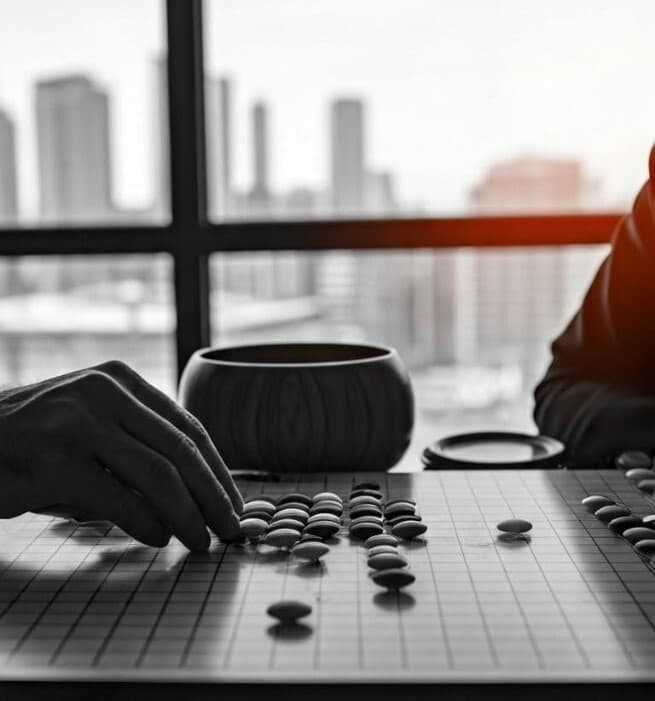
Psychotechnical games and exercises.
Play, as part of a child's healthy development, helps them loosen up and gradually deal with difficulties that seem insurmountable to them at the time (playing at competing, for example). Using psychotechnical games and exercises appropriate to the athletes' age satisfies their need to play and, at the same time, serves to activate and develop the relevant mental functions, to adjust their psychological state, and to build and maintain relationships within the group — while also being a means of pursuing a dual career.
"Psychotechnical games" sounds like "games not to be taken seriously", and points to a limited application — "in sport"; while "self-regulation" suggests the familiar, permitted forms — a kind of psychotherapy with a muzzle on.)
In fact these exercises were devised, tested, applied and described in a variety of settings: in psychotherapy with neurotic patients, in work with elite athletes, in personal growth groups — everywhere a good psychologist's foot could tread, and everywhere it was then thought it could not.
The book "PSYCHOTRAINING: GAMES AND EXERCISES" (by Nikolai Tszen and Yuri Pakhomov), on which this article is based, is full of episodes of practice, of the joy and discovery of meeting what is human in yourself, of a growing interest in our capacity simply to be — alone with ourselves and together with others.
Why play psychotechnical games with athletes?
Every coach feels the need to lift a young athlete after a poor performance, or to help them handle the nerves before a start, or to say something bracingly sharp that lets the athlete pull themselves together. Over long months and years of intensive work together, a coach inevitably finds an approach to each athlete. Day after day, working against the resistance of the "human material", the coach becomes more perceptive and wiser. He comes to know his students' minds and characters in fine detail. He knows who to say what to, and when. To get inside each of their inner lives he acquires a whole set of psychological keys and lockpicks.
In most cases the coach solves all the practical questions usually assigned to psychology perfectly well himself. He solves them better than a psychologist with a diploma would.
But a coach's intuition and experience are not all-powerful. And not every coach can boast of them. So alongside a masterly command of practical psychology, coaching also shows us the exact opposite.
Psychotechnical games and exercises are a universal psychological tool for a coach working with athletes of primary school, adolescent and youth age, because:
- Applied systematically, they can develop the core cognitive processes, the ability to self-regulate unhelpful mental states, and the building, maintenance and repair of relationships within a team or training group.
- They can reduce the subjective sense of fatigue and build and sustain athletes' motivation.
The game "Super-attention", for believing in yourself by convincing others:
What will the exercise help with?
The game offers a remarkable opportunity to believe in yourself by convincing others.
Much in this exercise depends on the facilitator's skill. They must watch carefully that the spell of the game is not broken either by the "disruptors" being too effective or by the "attentive ones" becoming aware of the game's deception.
The exercise should not be used in groups where relationships of mutual trust and a spirit of creative involvement have not yet formed. A successful run of "Super-attention" moves a group a long way forward, whereas a failure can cast doubt on the sessions as a whole.
The exercise lasts 5-15 minutes.
The "Super-attention" exercise
How it works:
Participants split into two groups: the "disruptors" and the "attentive ones".
- The facilitator places the attentive ones around the perimeter of the hall facing the centre, and gives them distinguishing marks (armbands, scarves or caps).
They are given these instructions:"Your task is to portray, to play, like an actor, to get into the role of a person entirely absorbed in some inner work and oblivious to their surroundings.
(The facilitator demonstrates the expression of a person with a blank, absent stare.) You have to inhabit that role and, standing with your eyes open and your ears uncovered, not notice what the others are doing. To make the task easier, try to picture vividly that you are watching a gripping film or taking part in a dangerous journey. Be consistent in your role: when the exercise ends (that is, after the command 'Stop!') and you are questioned, assert and convince the others that you really were entirely absorbed in your own thoughts and saw and heard nothing.
- The disruptors will receive their task during the exercise.
The facilitator and the disruptors put together a series of provocations. They chant "Petya is a genius of attention!", act out jokes, stage the end of the session and leaving the hall, imitate animals, beg the attentive ones for money and so on. Meanwhile the facilitator makes sure the disruptors' efforts are not too effective. They forbid touching the attentive ones and, at critical moments, help them hold their role. Then comes the command "Stop!", and the discussion begins.
- The paradox of this exercise is that the instructions keep working after the command "Stop!". The attentive one probably was distracted from the task now and then, but the rules of the game forbid admitting it. They are forced to convince their partners that they were absolutely attentive and never once looked away.The other participants' disbelief and doubts force the attentive one to reach for ever weightier arguments and, without noticing it, to become ever more firmly convinced of the unshakeability of their own concentration.
The facilitator uses their authority skilfully during the exercise, stopping anyone whose ill-timed scepticism ("Look! He flinched at that clap!") damages the development of the game. They must react instantly to such deviations, since a critical attitude can spread like a chain reaction and destroy the atmosphere of play. What is more, in many cases it is desirable for the facilitator to encourage the participants' acting with their own remarks and behaviour.